
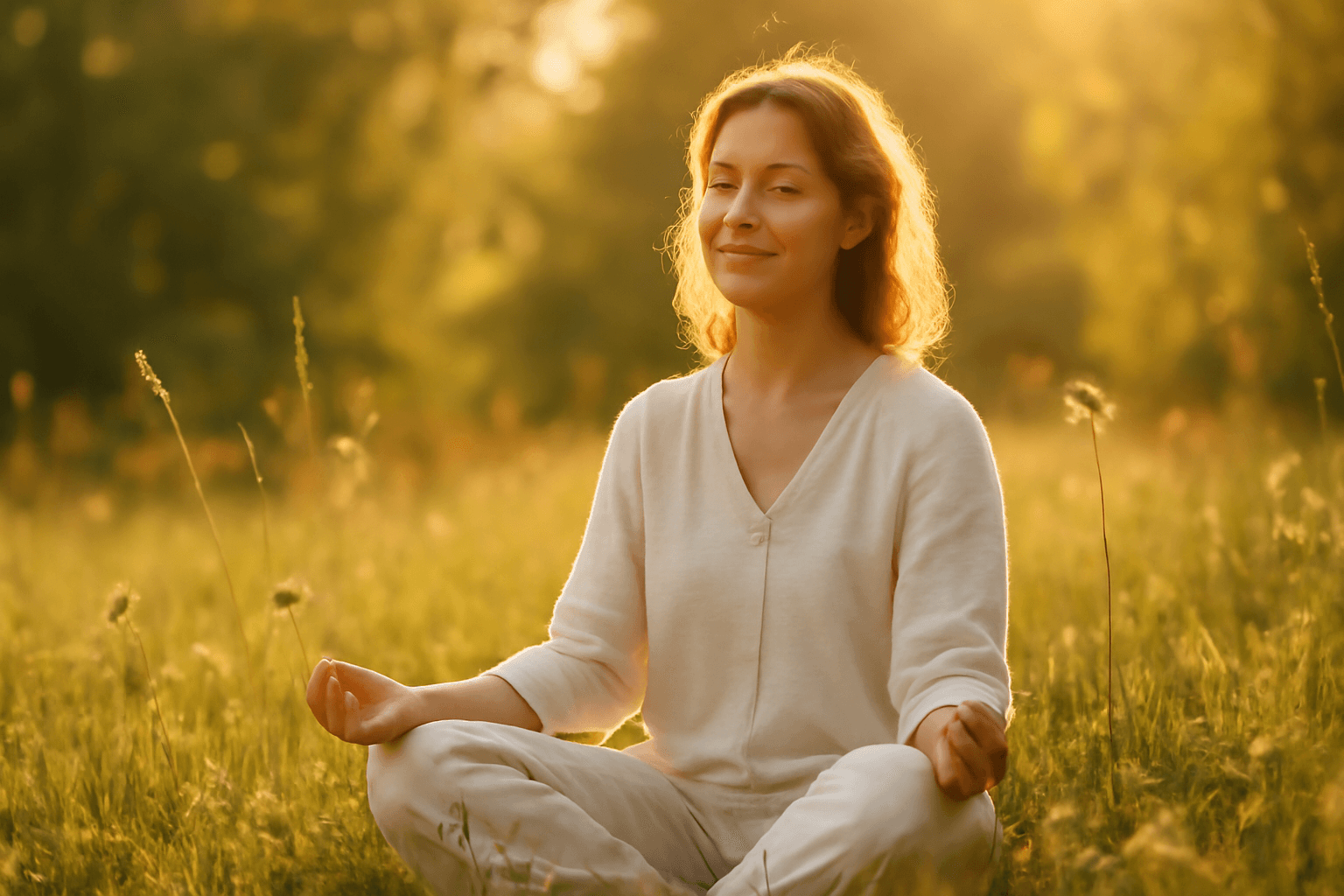
A reflection on presence, attention, and the quiet ways we drift away from the only moment life can actually be lived.
Living in the moment is often spoken of as if it were simple. Just be here, we are told. But anyone who has spent a quiet evening replaying yesterday or silently rehearsing tomorrow knows that presence is rarely that easy.
We do not leave the present all at once. More often, we drift from it quietly — through worry, memory, anticipation, distraction, and the endless inner movement of the mind.
Meanwhile, life continues here: in the breath, in the body, in the room, in the ordinary details we often pass through without truly touching.
To live in the moment is not to deny the past or abandon the future. It is to notice where we have gone, and to return gently to where life is actually taking place.
Perhaps the difficulty is not that we do not value the present moment. It is that modern life quietly trains us to leave it.
We are encouraged to anticipate, optimize, remember, compare, prepare, and respond. The mind becomes a room full of open doors, each one leading somewhere other than here.
And yet, living in the moment begins with a simple recognition: we cannot experience life anywhere else.
The past can teach us. The future can guide us. But the present is the only place where we can breathe, choose, listen, forgive, notice, and begin again.
Why Presence Feels So Difficult
Presence feels difficult because the mind is rarely still. It searches for unfinished stories, possible threats, better outcomes, and alternative versions of what has already happened.
This does not make the mind an enemy. In many ways, the mind is trying to protect us. It remembers pain so we can avoid repeating it. It imagines the future so we can prepare. It analyzes conversations so we can understand ourselves and others.
But when this movement becomes constant, we begin to live beside our lives instead of within them.
Living in the moment asks for something quieter. It does not ask us to silence the mind completely. It asks us to notice when we have been carried away, and to return with enough gentleness that returning becomes possible again.
Presence is not the absence of thought.
It is the moment we realize we are thinking.
It is the pause between being carried away and choosing to return.
Understanding Living in the Moment
Here’s the thing: your mind is designed to wander. It’s not a flaw or a failure — it’s how our brains keep us safe and prepare us for what’s ahead. When wandering becomes our default state, we lose touch with the richness of lived experience.
Living in the moment means gently redirecting your attention from mental narratives back to direct experience. For instance, instead of thinking about the walk you’re taking, you actually feel your feet touching the ground. Instead of planning your response during a conversation, you truly listen.
Research from Harvard Medical School shows that mindfulness practices literally change brain structure, strengthening areas associated with attention and emotional regulation. Over time, the Default Mode Network — responsible for mind-wandering — becomes less dominant.
Think of presence like tuning a radio. The station is always broadcasting, but you need to adjust the dial to hear clearly. Similarly, the present moment is always here. We just need to tune in.
Pause for a second — where is your attention right now? Can you feel your breath moving?
Why Being Present in the Moment Matters
The connection between presence and well-being runs deeper than most people realize. When we are truly here, we are not simply noticing more. We are living more fully.
Research on mind-wandering has suggested that people are often less happy when their attention is away from the present moment, even during ordinary daily activities. At the same time, people report greater life satisfaction when they’re engaged with their current activity.
But beyond the research, there’s something essentially human about this. Present awareness allows us to experience beauty, taste our food, feel warmth on our skin, and connect authentically with others. It is also where creativity lives, where intuition speaks, and where healing happens.
On the other hand, when we’re constantly elsewhere mentally, we miss the small moments that make up a life well-lived. Eventually, months pass, then years, and we wonder where the time went.
Just as breaking free from autopilot requires conscious choice, cultivating presence means choosing awareness over distraction, again and again.
Think about how this could change your daily routine — even in small ways.
Where Presence Becomes Practice
You don’t need hours of meditation or a retreat in the mountains to practice presence. In fact, the most transformative practice happens in ordinary moments throughout your day.
1. Morning Presence Anchor Ritual
Before reaching for your phone, spend two minutes simply noticing. Feel the weight of your body in bed. Notice sounds around you. Take three conscious breaths. As a result, you set a tone of awareness for your entire day.
2. Single-Task Moments for Living Present
Choose one routine activity daily — washing dishes, brushing teeth, making coffee — and do only that. Resist the urge to plan, problem-solve, or multitask. Simply be with the sensory experience fully.
3. Mindful Transitions
Use transitions as presence cues. For example, when you open a door, take one conscious breath. When you sit down, feel your body settling into the chair. These micro-moments accumulate into greater awareness.
4. The 5-4-3-2-1 Present Moment Grounding
Notice 5 things you see, 4 you can touch, 3 you hear, 2 you smell, and 1 you taste. This sensory exercise pulls you immediately into the present moment. It works especially well during anxious moments.
5. Conversation Presence Practice
During your next conversation, practice listening without preparing your response. Notice when your mind drifts to judgment or planning. Then, gently return your attention to the person speaking. In turn, your relationships naturally deepen.
Similarly, embracing quiet moments creates space for presence to emerge naturally, without force or effort.
Ready to give it a try? Here’s where you can start — with just one mindful breath between this sentence and the next.
Questions That Bring Us Back to Ourselves
Presence deepens through gentle self-inquiry. Take a moment right now to explore your own relationship with the present moment.
Consider these questions:
- When do I feel most present and alive? What conditions support that state?
- What pulls me away from the present most often — regret, worry, distraction, or something else?
- What would change in my life if I were more consistently present?
There’s wisdom in noticing patterns without judgment. Instead, approach this exploration with curiosity and compassion. You are learning your own rhythms and triggers.
You might keep a brief presence journal. Each evening, note one moment when you felt fully present and one when you were lost in thought. Over time, you’ll discover what supports your practice. With time, you’ll notice how presence itself becomes more accessible.
After all, the goal isn’t perfect presence — that’s impossible and exhausting. The goal is recognizing when you’ve drifted and choosing to return, over and over, with kindness.
Take a deep breath and reflect — what comes up for you right now?
The Gentle Discipline of Returning
Maybe living in the moment is not about staying present all the time.
Maybe it is about becoming more honest about how often we leave.
We leave through worry. We leave through regret. We leave through comparison, distraction, hurry, fear, and the desire to control what has not yet arrived.
But each time we notice, we are given a quiet invitation to return.
Not perfectly.
Not permanently.
Just now.
And perhaps that is enough.
Final Thoughts and Encouragement
Living in the moment isn’t about achieving some enlightened state where you never think about the past or future. That is neither possible nor desirable. Planning, learning from experience, and dreaming about possibilities all have their place.
The art of presence is more subtle than that. It is about knowing where you are mentally and choosing where you want to be. It’s noticing when you’ve been swept away by thought and gently guiding yourself back to now. And it is done with patience and self-compassion.
In the end, presence is the ultimate generosity — to yourself and to others. Rather than living half-awake, scattered across time zones of past and future, you’re fully here for the only moment you actually have.
Your life isn’t waiting somewhere in the future when conditions are perfect. It’s happening now, in this breath, this heartbeat, this single unrepeatable moment.
Perhaps the beginning is smaller than we imagine. One breath. One pause. One honest return to the life already happening here
Frequently Asked Questions About Living in the Moment
What does living in the moment really mean?
Living in the moment means becoming aware of where your attention is and gently bringing it back to your direct experience. It is not about rejecting the past or ignoring the future, but about remembering that life can only be lived in the present.
Why is it so hard to be present?
It is hard to be present because the mind naturally moves toward memory, anticipation, worry, and planning. This movement is human. The practice is not to stop thinking completely, but to notice when the mind has wandered and return with patience.
Can presence change the way we experience daily life?
Yes. Presence can make ordinary moments feel more vivid and meaningful. It can deepen listening, soften reactivity, and help us notice the small details of life that often disappear when we are mentally elsewhere.
Written with care by the founder of Personal Orb

Patricia is the founder and editor of PersonalOrb. She writes about emotional growth, relationships, reflection, grief, and inner development.
Her work is grounded in long-term personal study, careful reading, and an editorial approach focused on clarity, depth, and emotional honesty.
PersonalOrb is an independent editorial project dedicated to thoughtful, slow, and honest exploration of emotional life.
This article is intended for educational and reflective purposes only and does not replace professional psychological, medical, or mental health support. If you are dealing with a health concern, please seek guidance from a qualified professional.