
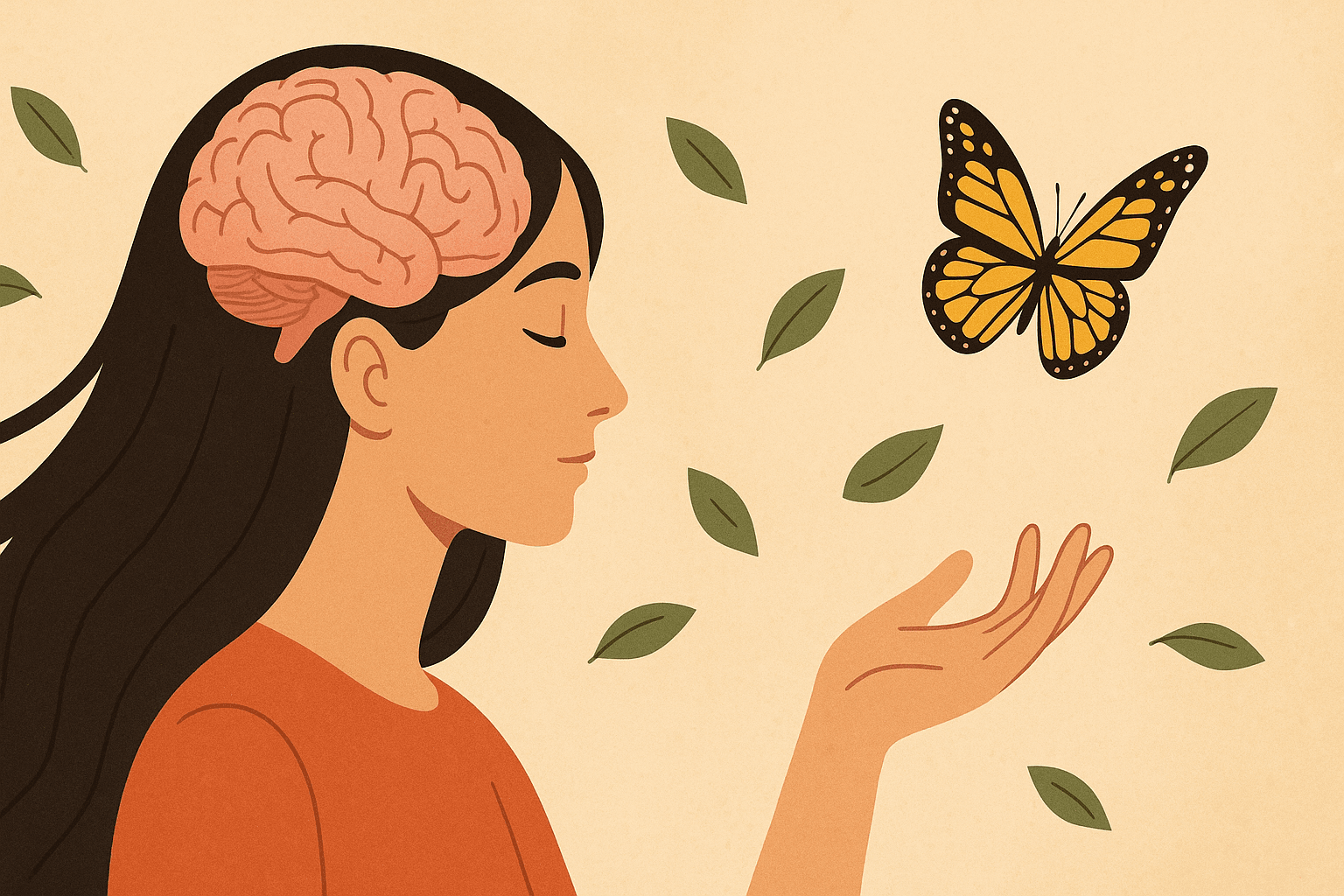
We’ve all been there—replaying conversations in our heads, holding onto past hurts, or carrying emotional weight that doesn’t serve us anymore. The process of letting go often feels impossible, like trying to unclench a fist that’s been closed for years. But here’s something remarkable: your brain is designed to heal through neural awareness healing. Recent discoveries in letting go neuroscience reveal that our minds are far more adaptable than we once believed. When you understand how your brain processes attachment and release through neural awareness healing, you gain real power to transform pain into peace.
This isn’t about forcing yourself to forget or pretending everything is fine. True healing happens when you work with your brain’s natural mechanisms, not against them.
Understanding the Neuroscience of Emotional Attachment
Your brain forms attachments through neural pathways—think of them as well-worn trails in a forest. Every time you revisit a memory, relive an emotion, or repeat a thought pattern, you strengthen that pathway. This happens through a process called neuroplasticity, where your brain literally rewires itself based on experience.
How Your Brain Tags Emotional Memories
The amygdala, your brain’s emotional center, tags certain experiences as significant. When something causes pain or joy, this almond-shaped structure ensures you remember it. Meanwhile, the prefrontal cortex—your brain’s reasoning center—tries to make sense of these emotions and decide how to respond.
Here’s where things get complex: the hippocampus, responsible for memory formation, works closely with the amygdala. When an experience carries intense emotion, these structures create what neuroscientists call “emotional memory consolidation.” This is why you can remember exactly where you were during a painful breakup, but forget what you ate for lunch last Tuesday.
The Chemistry of Attachment
Your brain also releases specific neurochemicals during attachment. Oxytocin creates bonding, dopamine generates pleasure and reward, and cortisol marks experiences as threatening. When relationships end or situations change, your brain doesn’t simply delete these chemical associations. The pathways remain active, waiting for similar triggers.
Here’s a real-world example: imagine someone who was betrayed by a close friend. Their brain creates a strong neural connection between trust and danger. Years later, even healthy friendships might trigger anxiety because that pathway remains active. The brain isn’t being difficult—it’s trying to protect you based on past data.
Another way to understand this: your mind operates like a prediction machine. It uses old experiences to forecast future outcomes. When you’ve been hurt, your brain predicts similar situations will hurt again. This protective mechanism becomes a prison when it prevents healing and keeps you trapped in cycles of avoidance or self-sabotage.
Why Letting Go Matters for Your Wellbeing
Holding onto emotional pain isn’t just uncomfortable—it actively harms your health. Research published in the Journal of Behavioral Medicine shows that chronic rumination (repeatedly thinking about negative experiences) increases cortisol levels, weakens immune function, and contributes to depression.
The Physical Cost of Holding On
Your body doesn’t distinguish between physical and emotional threats. When you mentally revisit trauma, your nervous system responds as if the danger is happening right now. This keeps you in a constant state of stress, draining energy that could fuel growth and joy.
The physical toll manifests in multiple ways. Chronic stress from unresolved emotions can lead to headaches, digestive issues, muscle tension, and sleep disturbances. Additionally, your cardiovascular system suffers—studies show that people who ruminate excessively have higher blood pressure and increased risk of heart disease.
The Emotional Ceiling Effect
But the damage extends beyond the physical. Emotionally, the inability to let go creates a glass ceiling on happiness. You might achieve external success—promotions, relationships, accomplishments—yet feel empty inside. That’s because your neural resources are consumed by maintaining old patterns rather than experiencing present joy.
Relationships suffer profoundly. When you can’t release past betrayals, you unconsciously test new people against old wounds. You might push away genuine connection because your brain keeps saying “remember what happened last time.” This creates a tragic irony: the protection mechanism meant to keep you safe actually guarantees the loneliness you fear.
Perhaps most painfully, holding on distorts your identity. You become “the person who was hurt” rather than the multifaceted individual you are. The story narrows to a single chapter, replayed endlessly, while new chapters remain unwritten.
The Hopeful Science of Neural Awareness Healing
But here’s the hopeful truth: neural awareness healing creates space for transformation. Studies in neuroplasticity show that when you stop reinforcing old patterns, those neural pathways weaken naturally through a process called “synaptic pruning.” New pathways form in their place—ones that support resilience, openness, and emotional freedom.
Think of it like a garden. If you stop watering weeds, they eventually die. The soil becomes available for flowers instead. Similarly, your brain works the same way through neural awareness healing. Each time you choose not to ruminate, you’re essentially withdrawing water from the weeds. Initially, they’re still there. But gradually, imperceptibly, they weaken.
How to Apply Neural Awareness Healing in Daily Life
Understanding the science is powerful, but transformation requires practice. Here are concrete, neurologically-informed steps to help your brain learn release through neural awareness healing:
Redirect Your Attention Deliberately
Practice deliberate redirection. When rumination starts, acknowledge the thought without judgment, then consciously shift your attention. You’re not suppressing emotion—you’re training your prefrontal cortex to override automatic patterns. Even five seconds of redirection begins to weaken old pathways. Name what you notice: “There’s the thought about that argument again.” This simple act of labeling activates your prefrontal cortex and reduces amygdala reactivity.
Move Your Body to Reset
Use physical movement to reset your nervous system. Your brain and body communicate constantly through the vagus nerve. Walking, stretching, or even shaking your hands can signal safety to your amygdala. This interrupts the stress response and makes emotional release easier. Try this: when painful memories surface, stand up and take ten deliberate steps. The bilateral movement actually helps your brain process stuck emotions.
Contain Your Worries
Create a “worry window.” Set aside 10 minutes daily to think about what bothers you. Outside that window, redirect your thoughts. This technique, supported by cognitive behavioral therapy research, helps contain rumination instead of letting it dominate your day. Schedule it for the same time daily—your brain loves predictability and will gradually learn to consolidate worrying into that specific period.
Write to Process
Rewrite your narrative through journaling. Writing about difficult experiences activates your prefrontal cortex, allowing you to process emotions logically. This doesn’t erase memories but changes how your brain categorizes them—from “active threat” to “past event.” Dr. James Pennebaker’s research shows that writing about trauma for just 15 minutes over four days can produce measurable improvements in physical and emotional health months later.
Stay Present
Engage in activities that require present-moment focus. Cooking, art, exercise, or conversation demands attention and naturally interrupts rumination loops. The more time you spend fully present, the less power old patterns hold. Choose activities that engage multiple senses—gardening, pottery, baking. The sensory richness helps anchor you in the now.
Breathe for Safety
Use breathing to signal safety. Your breath is a direct line to your autonomic nervous system. Slow, deep breathing (inhale for four counts, exhale for six) activates the parasympathetic nervous system, telling your amygdala that you’re safe. Practice this whenever you notice yourself gripping onto painful thoughts.
The neuroscience of neural awareness healing teaches us that small, consistent actions create lasting change. You don’t need to achieve complete release overnight. Each moment of conscious choice reshapes your brain slightly.
Just as bioenergetics helps you reconnect with your body’s natural energy flow, understanding your brain’s healing mechanisms empowers you to release what no longer serves you. When you combine physical awareness with neural understanding, healing accelerates exponentially.
Developing Awareness Through Mindful Reflection
True neural awareness healing requires honest self-examination. Your brain can’t release what you haven’t acknowledged. This section invites you to explore your inner landscape with curiosity, not criticism.
Questions for Self-Discovery
Start with these reflection questions:
What am I still holding onto from my past? Name specific people, situations, or beliefs that occupy mental space. Be ruthlessly honest. Sometimes we hold onto things we don’t even like because they’re familiar, and familiarity feels safer than uncertainty.
What purpose did this attachment serve? Often, holding on provided protection or identity. Understanding the original function helps you find healthier alternatives. For example, if holding onto anger kept you feeling powerful after someone hurt you, you can consciously develop genuine power through self-advocacy instead.
What would become available if I released this? Consider the energy, attention, and emotional capacity you’d reclaim. Write down specific things: “I’d have energy to pursue my art,” or “I’d stop comparing every new partner to my ex.”
What am I afraid will happen if I let go? This is the crucial question most people avoid. Common fears include: “If I stop being angry, it means what they did was okay,” or “If I’m not defined by this hurt, who am I?”
Body-Based Awareness
Try this mindfulness practice: Sit quietly for five minutes. Notice where tension lives in your body—your jaw, shoulders, stomach. Breathe into those areas. Often, emotional holding manifests physically. The body knows what your mind hasn’t admitted yet. That tight feeling in your chest might be grief you haven’t processed. The clenched jaw could be anger you’ve never expressed.
Journaling for Release
Journal prompt: “If I fully let go of [specific situation], I’m afraid that…” Complete this sentence honestly. Fear often keeps us tethered. Once you name what scares you about release, that fear loses power. Follow up with: “A more truthful perspective is…” This engages your prefrontal cortex to reality-test your fears.
Understanding Non-Linear Healing
Remember that neural awareness healing isn’t linear. Some days you’ll feel light and free. Others, old patterns will surge back. This is normal. The brain is testing whether the old pathway still works. Each time you choose differently, you prove it doesn’t. Neuroscience calls this “extinction learning”—the old pattern isn’t erased, but a new, stronger pattern grows alongside it.
Neuroscientist Dr. Rick Hanson explains that the brain has a “negativity bias”—we remember bad experiences more intensely than good ones. Counteract this by deliberately savoring positive moments. When something good happens, pause for 15-20 seconds. Let it sink in. This actively builds neural pathways for joy and resilience.
Learning to practice detachment doesn’t mean becoming cold or disconnected—it means creating healthy space between your sense of self and temporary experiences. This space is where healing happens.
Moving Forward: Your Brain’s Capacity for Renewal
The most liberating truth about neural awareness healing is this: change is always possible. Your brain remains plastic throughout life, capable of forming new patterns at any age. The neural pathways that cause suffering today can become quiet trails tomorrow.
Evidence of Brain Plasticity
Studies on neuroplasticity show that London taxi drivers develop larger hippocampi from memorizing complex street layouts—in adulthood. If the brain can make these dramatic changes, it can certainly learn to release old emotional patterns.
Healing doesn’t mean you’ll forget what happened or that pain was meaningless. It means you’re no longer defined by it. The experience becomes part of your story, not the story itself. You shift from being a victim of your past to being the author of your present.
Practice Self-Compassion
Start with self-compassion. The brain developed protective patterns for good reasons. Thank those patterns for keeping you safe, then gently explain they’re no longer needed. This might sound unusual, but talking to your brain as an ally—not an enemy—engages your prefrontal cortex in the healing process.
Try this: place your hand on your heart and say, “Thank you for trying to protect me. You did your job well. I’m safe now, and I’m ready to try something different.” This activates self-compassion circuits in your brain, making change easier.
Track Small Wins
Celebrate small victories. The first time you catch yourself ruminating and choose differently, that’s monumental. You’ve just created a new neural possibility. The second time is easier. The tenth time feels almost natural. The hundredth time becomes your new default.
Surround yourself with experiences that reinforce who you’re becoming, not who you were. Your environment shapes your brain constantly. Choose relationships, activities, and spaces that support release rather than attachment to pain.
Seek Professional Support
Remember that professional support accelerates healing. Therapists trained in neuroscience-based approaches like EMDR, somatic therapy, or neurofeedback can help your brain process stuck emotions more efficiently than willpower alone.
Begin Your Neural Awareness Healing Today
Your brain is already working toward healing—it just needs your conscious participation. Every moment offers a choice: strengthen old patterns or build new ones. Every breath is an opportunity to release what doesn’t serve you.
The science is clear: you’re not broken, and you’re not stuck. You’re a dynamic system capable of profound transformation. The neural pathways of pain can become pathways of peace. The same brain that learned to hold on can learn to let go.
Start with one practice from this article. Just one. Maybe it’s five seconds of redirection when rumination starts. Maybe it’s a single journal entry exploring what you’re afraid will happen if you release this pain. Perhaps it’s simply noticing where tension lives in your body and breathing into that space.
That’s enough to begin rewiring your brain toward freedom. Neuroplasticity research shows that a single instance of new behavior creates the initial neural connection. It’s weak at first, like a footpath through grass. But each repetition strengthens it until it becomes a highway.
You don’t need perfect conditions or unlimited time. You need willingness and consistency. Five minutes daily beats an hour once a month. The brain learns through repetition, not intensity.
Neural awareness healing isn’t about forgetting or denying your experience. It’s about trusting your brain’s magnificent ability to heal, adapt, and create new possibilities. You’ve carried that weight long enough. The nervous system is exhausted from the constant vigilance. Your heart is tired from the armor it’s worn.
What would it feel like to set it down? Not recklessly, not all at once, but gradually, deliberately, with the support of science and self-compassion. What would become possible if the energy you’ve spent maintaining old pain could flow toward building new joy?
Your brain is ready. The question is: are you willing to let it heal you?