
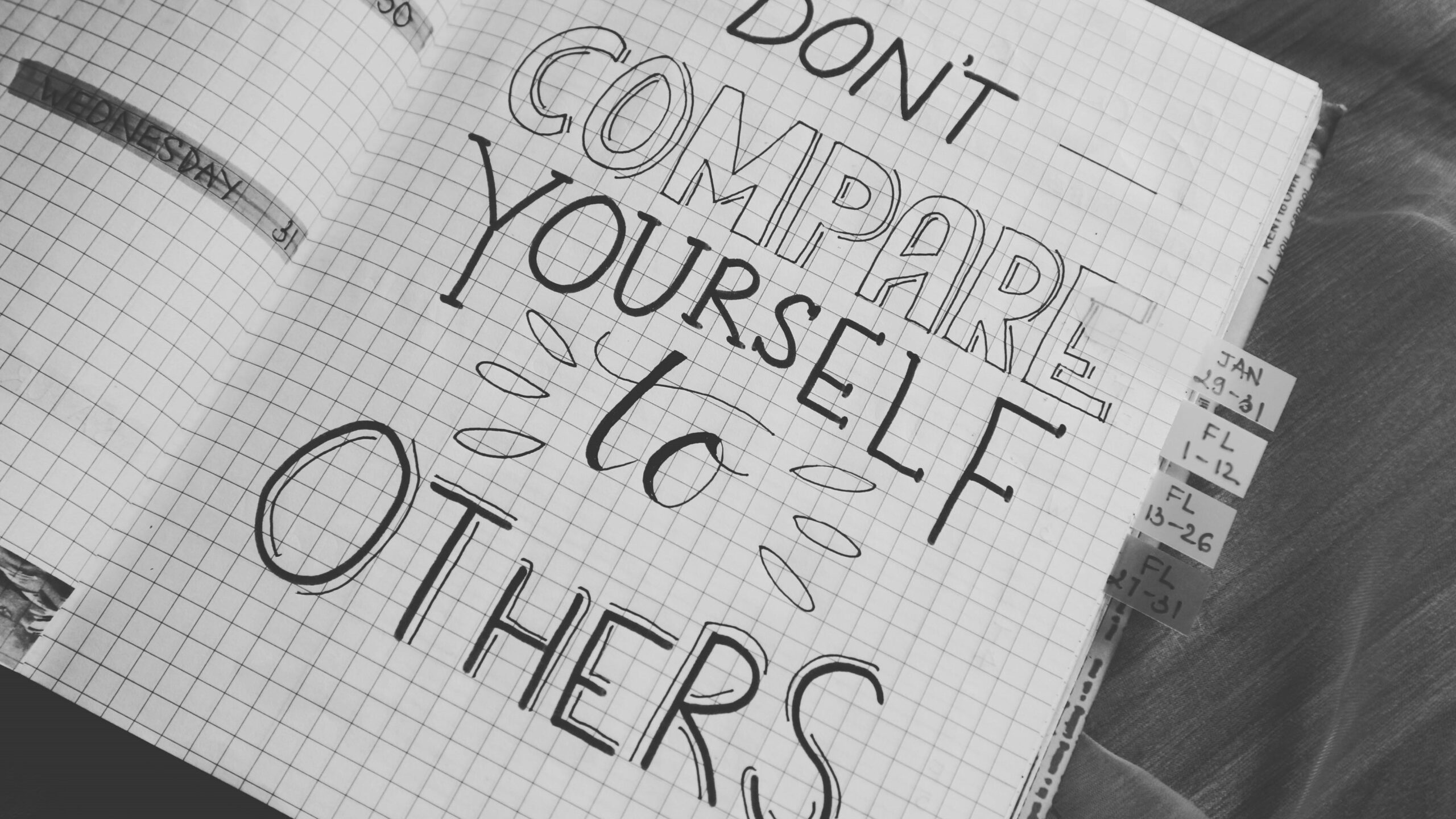
Learn how to stop comparing yourself to others with practical mindfulness strategies. Build self-acceptance and inner peace starting today.
You scroll through social media. Meanwhile, someone just got promoted. In the next post, your friend is traveling to Bali. Then, your neighbor bought a new house. Suddenly, your own life feels small.
If this sounds familiar, you’re not alone. In fact, learning how to stop comparing yourself to others is one of the most valuable skills you can develop. After all, comparison drains joy, distorts your reality, and keeps you stuck in someone else’s story.
The truth is simple but powerful: you’re measuring your behind-the-scenes against everyone else’s highlight reel. As a result, it’s an unfair game you can’t win.
In this article, we’ll explore why comparison happens, what it costs you, and most importantly — practical ways to stop comparing yourself to others and reclaim your peace.
If you’ve ever felt this way, keep reading — you’re not alone.
Understanding Why We Compare Ourselves to Others
First of all, comparison isn’t a character flaw. Instead, it’s human nature.
For thousands of years, humans used social comparison to survive. Specifically, we assessed our place in the group. Furthermore, we measured our safety. Additionally, we gauged our progress against others.
In 1954, psychologist Leon Festinger introduced social comparison theory. Through his research, he discovered that people naturally evaluate themselves by looking at others — especially when clear standards don’t exist.
However, the problem today is different. We’re no longer comparing ourselves to our small village. Instead, we’re comparing ourselves to billions of curated images online. For instance, Instagram influencers, LinkedIn success stories, and TikTok highlight reels.
Meanwhile, you’re comparing your messy reality to someone else’s polished fiction. For example, you compare your body to a fitness model. Similarly, you compare your income to a CEO. Likewise, you compare your relationship to a couple’s vacation photos.
In the end, it’s exhausting because it’s fundamentally flawed.
Pause for a second — can you relate to this feeling?
Why Comparison Hurts Your Mental Health
Constantly comparing yourself to others isn’t just uncomfortable. In fact, it damages your wellbeing.
For instance, research published in the Journal of Social and Clinical Psychology found that limiting social media reduced depression and loneliness. The reason? Less comparison.
When you compare yourself to others, several things happen:
- First, your self-esteem drops. As a result, you focus on what you lack instead of what you have.
- Second, anxiety increases. Consequently, you feel pressure to keep up with impossible standards.
- Third, gratitude disappears. Therefore, you stop appreciating your own journey.
- Finally, envy grows. In other words, someone else’s success feels like your failure.
On the other hand, people who practice self-acceptance report higher life satisfaction. Moreover, they experience more gratitude, stronger relationships, and deeper purpose.
That said, the shift doesn’t mean ignoring others. Rather, it means reclaiming your attention and directing it inward — toward your values, growth, and unique path.
According to Psychology Today, chronic social comparison is linked to rumination, envy, and regret.
Think about how this could change your daily routine — even in small ways.
Practical Ways to Stop Comparing Yourself to Others
Breaking the comparison habit takes practice. However, here are actionable steps you can start today.
1. Limit Your Exposure to Comparison Triggers
First, notice what sparks comparison. For example, is it Instagram? LinkedIn? Or perhaps a certain friend group?
You don’t need to delete everything. Instead, you can curate your environment. Specifically, unfollow accounts that make you feel inadequate. Additionally, set time limits on apps. Above all, choose real conversations over endless scrolling.
Ask yourself: Does this content inspire me or drain me?
2. Focus on Your Own Progress
Instead of asking “Am I better than them?” ask “Am I better than yesterday?”
For instance, keep a simple progress journal. Then, write down small wins. This could include learning something new, handling a tough conversation, or simply showing up for yourself.
In other words, track your growth, not someone else’s highlight reel.
3. Practice Daily Gratitude
Gratitude rewires your brain away from scarcity. Therefore, each morning or evening, write three things you’re grateful for.
They don’t need to be big. For example, a good cup of coffee, a kind text, or a quiet moment. Over time, this practice shifts your focus from what’s missing to what’s already here.
Furthermore, research from Greater Good Science Center shows gratitude increases happiness and reduces depressive symptoms.
4. Reframe Envy as Information
When you feel envious, pause. Then, ask yourself: What is that emotion telling you?
Perhaps it points toward something you value. For instance, if you’re envious of someone’s creative career, it might be time to explore your creativity.
In essence, use comparison as a mirror, not a measuring stick.
5. Celebrate Others Without Losing Yourself
Someone else’s success doesn’t erase yours. After all, the universe isn’t keeping score.
Therefore, practice genuine celebration. For example, send a congratulatory message. Notice how it feels to support someone without the weight of comparison.
It’s liberating.
6. Remember: You Only See Part of the Story
That promotion your colleague got? You didn’t see the rejections before it.
Similarly, that perfect relationship? You don’t see the arguments or compromises.
Likewise, that fitness transformation? You don’t see the discipline or struggles.
In reality, everyone is fighting battles you know nothing about. Therefore, comparison ignores context.
Ready to give it a try? Here’s where you can start.
Reflection Questions to Stop Comparing Yourself
Take a moment to check in with yourself. Grab a notebook or open a notes app. These questions can guide you:
- First, when do I most often compare myself to others? What triggers it?
- Second, what do I gain from comparison? What does it cost me?
- Third, if I stopped comparing myself, what would I focus on instead?
- Additionally, what am I proud of in my journey, regardless of anyone else’s path?
- Finally, what makes my journey uniquely mine?
You don’t need perfect answers. Instead, just honest ones.
In fact, awareness is the first step toward change. Moreover, self-compassion is the second.
Take a deep breath and reflect — what comes up for you right now?
Building a Comparison-Free Mindset
Stopping comparison isn’t about ignoring others. Rather, it’s about changing your relationship with yourself.
Here’s what helps:
First, define your own success. What does a meaningful life look like to you? Not to your parents. Not to society. But to you.
Second, embrace your timeline. You’re not late. You’re not behind. Instead, you’re exactly where you need to be right now.
Third, practice self-compassion. Talk to yourself like you’d talk to a friend. With kindness, with patience, and with encouragement.
Finally, focus on contribution, not competition. How can you serve? How can you create? How can you grow?
In the end, when you shift from comparison to contribution, everything changes.
Final Thoughts on Stopping Comparison
Learning how to stop comparing yourself to others is a practice, not a destination. That said, some days will be easier than others.
However, each time you choose self-acceptance over comparison, you reclaim your power. Moreover, you honor your journey. As a result, you free yourself from an impossible standard.
You are not behind. You are not lacking. Furthermore, you are not failing.
Instead, you are exactly where you need to be, learning what you need to learn, and becoming who you’re meant to become.
After all, the world doesn’t need another version of someone else. Rather, it needs you — as you are, moving forward at your own pace.
Your journey starts with one mindful decision — why not begin today?